


Start here: There are five recognised skin types, normal, dry, oily, combination and sensitive. Almost every skincare mistake starts with treating your skin as the wrong one. Identify your type first, choose a cleanser to match, and keep the routine simple and consistent.
Skin is the largest organ in the body and the easiest one to neglect, because neglecting it costs nothing today. The bill arrives later, as dullness, congestion, pigmentation or premature lines. In Karachi the conditions make it harder still, since dust, humidity and strong sun all work against your skin barrier.
The good news is that a routine does not need to be elaborate to work. It needs to match your skin type and it needs to be repeated.
What is your skin type?
Before buying anything, work out which of the five types you have. A simple test: wash your face with a gentle cleanser, pat dry, then wait an hour without applying anything. How your skin feels and looks after that hour tells you most of what you need to know.
Dry skin
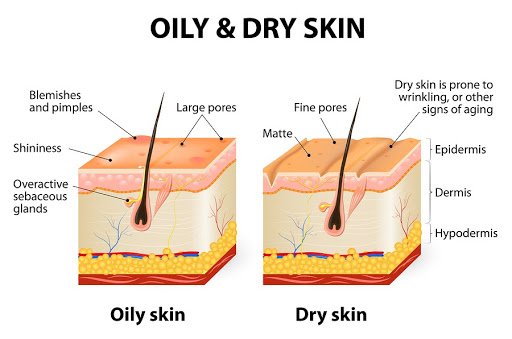
Dry skin does not retain enough moisture. It can feel tight after washing, and may show flaking, itching or fine cracking. Many people only experience it seasonally, in winter or in air conditioning.

Oily skin
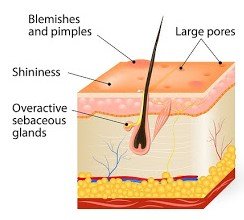
When the sebaceous glands produce excess sebum, skin looks shiny, pores appear enlarged, and breakouts are more frequent. Oily skin still needs moisture. Stripping it with harsh products usually makes oil production worse, not better.
Normal skin
Balanced, neither notably oily nor dry, with an even texture and pores that are not especially visible. It still benefits from cleansing, moisturising and daily sunscreen, it simply tolerates a wider range of products.
Sensitive skin
Sensitive skin reacts, with stinging, redness or itching, to products that others tolerate easily. That does not necessarily mean the product is bad. It usually means one of its ingredients, often a fragrance, an acid or a strong active, does not suit your barrier. Introduce one new product at a time so you can identify the culprit, and patch test before applying anything to the whole face.
Combination skin
The most common type. The T-zone across the forehead, nose and chin runs oily while the cheeks stay normal or dry. It is not caused by acne or dark patches, it is simply how sebaceous glands are distributed across the face. The practical challenge is that one product rarely suits both zones, so many people treat each area slightly differently.
A note on scaly or flaking skin
Skin that peels in larger flakes resembling scales, with itching, redness and cracking, is a skin condition rather than a skin type. It is usually severe dryness, and sometimes eczema or a related condition. If it persists despite moisturising, have it assessed rather than treating it as ordinary dry skin.
Choosing a cleanser for your skin type
Cleanser is where most routines succeed or fail, because it is the product with the most direct contact and the greatest capacity to disrupt your barrier. These are widely available, dermatologically tested options, offered as a starting point rather than a prescription.
| Skin type | Cleanser |
| Dry skin | Neutrogena Hydro Boost Hydrating Cleansing Gel |
| Oily skin | Cetaphil Pro DermaControl Oil Removing Foam Wash |
| Normal skin | La Roche-Posay Toleriane Hydrating Gentle Cleanser |
| Sensitive skin | Cetaphil Daily Facial Cleanser |
| Very dry or flaking skin | CeraVe Hydrating Cleanser |
| Combination skin | La Roche-Posay Effaclar Purifying Foaming Gel Cleanser |
These are suggestions based on skin type, not endorsements, and FG Cosmo has no commercial relationship with any of these brands. If you have an active skin condition, ask a doctor before changing your routine.


A simple routine that works for most people
- Morning: gentle cleanser, moisturiser suited to your type, and broad-spectrum sunscreen. Sunscreen is the single highest-value step in any routine.
- Evening: remove makeup and sunscreen properly, cleanse, then moisturise. Add a treatment product such as a retinoid or an acid only if your skin tolerates it, and only a few nights a week to begin.
- Weekly: gentle exfoliation if your skin allows. More is not better here.
When a professional treatment helps
Home care maintains skin. It cannot do much about deep congestion, stubborn pigmentation or texture that has built up over years. That is where in-clinic skin services in Karachi come in.
For dull, dehydrated or congested skin, a HydraFacial cleanses and hydrates in one session with no downtime, and you can read an honest first-hand account of one here. For texture and surface renewal there is microdermabrasion and microneedling. For brightness, options include a Vitamin C booster or a skin brightening booster. Which of these suits you depends on your skin, which is why every treatment starts with an assessment.
Frequently asked questions
How do I know my skin type?
Wash with a gentle cleanser, pat dry, and wait an hour without applying anything. Tight or flaky means dry, shiny all over means oily, shiny only in the T-zone means combination, comfortable and even means normal. Skin that stings or reddens easily is sensitive, which can overlap with any of the others.
Can my skin type change?
Yes. It shifts with age, season, climate, hormones and medication. Skin that was oily in your twenties often turns drier later, so it is worth re-checking rather than assuming.
Does oily skin need moisturiser?
Yes. Skipping moisturiser on oily skin often backfires, because a dehydrated barrier can produce more oil to compensate. Use a light, non-comedogenic formula.
What is the most important step in a skincare routine?
Daily broad-spectrum sunscreen. Nothing else in a routine prevents as much pigmentation, dullness and premature ageing, and this matters especially in Karachi’s sun.
How often should I exfoliate?
Once or twice a week is enough for most people, and less if your skin is sensitive. Over-exfoliating damages the barrier and tends to cause the exact dullness and irritation it is meant to fix.
Which treatment is best for dull, tired skin?
For most people a HydraFacial is the straightforward starting point, since it cleanses, exfoliates and hydrates in one session with no downtime. Persistent pigmentation or texture may need a different approach, which is decided at a skin assessment.
One Response
very informative