
Hair PRP Treatment in Karachi
Hair PRP uses platelet-rich plasma drawn from your own blood to support scalp health, nourish hair follicles, and encourage healthier hair growth — a natural, non-surgical approach.
✓ Hair support
✓ PRP treatment
✓ Scalp rejuvenation
✓ Non-surgical care
Quick Facts
Age range
Adults
Duration
45–60 minutes
Anaesthesia
Numbing if needed
Recovery
Same day
What is this treatment?
Natural support for healthier hair from the scalp up
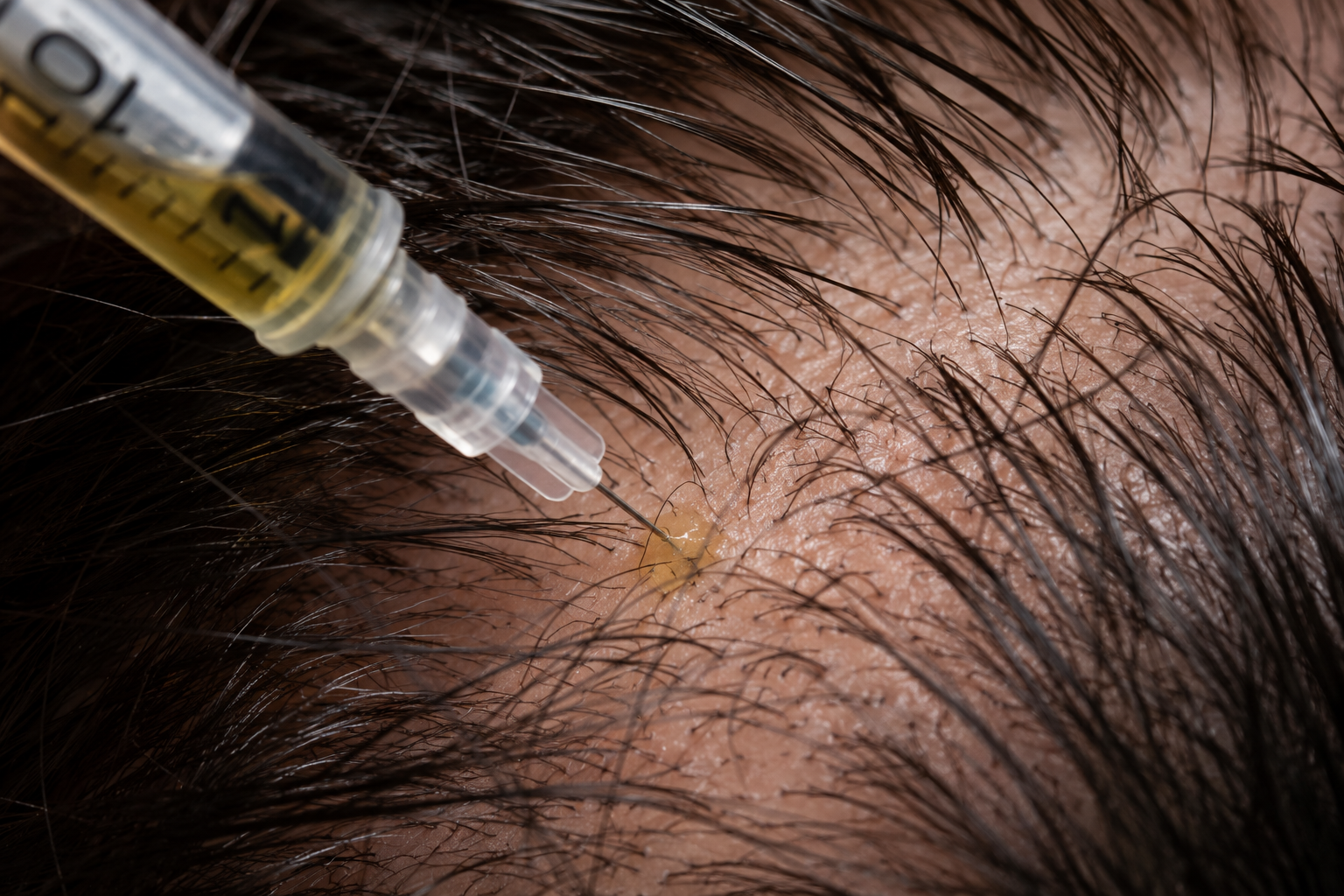
Hair PRP involves drawing a small blood sample, processing it to concentrate the platelets, and injecting the resulting platelet-rich plasma into the scalp. The growth factors within PRP support the health of hair follicles and may improve hair quality, density, and the condition of the scalp.
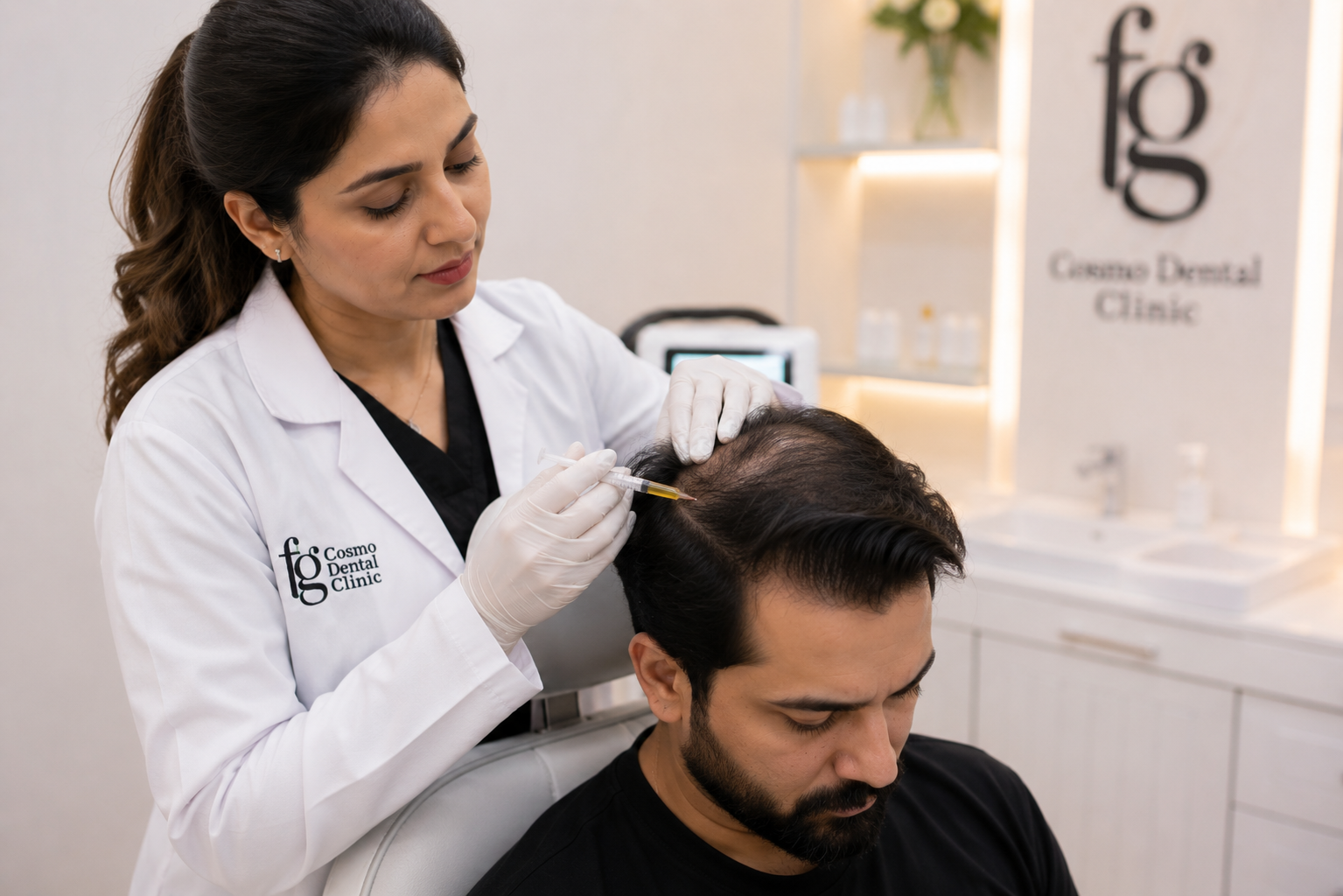
At FG Cosmo Dental, Hair PRP is performed by Dr. Gul Owais using precise injection technique. Because it uses your own blood components, it is a natural option with a low risk of reaction. Results develop gradually over several months with a course of treatment.
PRP hair treatment cost in Karachi depends on the number of sessions and the condition of your hair, so the final price is confirmed after a scalp consultation. Most patients need a course of 3–6 sessions for the best results. Call or WhatsApp 0300-1387788 for a personalised quote.
For advanced regeneration, Hair PRP is often combined with exosome therapy in Karachi to further stimulate the follicles and boost hair density.
- Uses your own plasma — no synthetic substances
- Growth factors delivered directly to the scalp and follicles
- Supports healthier scalp condition and hair quality
- Non-surgical appointment with little recovery time for most patients
- Suitable for early-stage thinning and hair concerns
Signs & symptoms
Could Hair PRP help you?
A consultation with Dr. Gul will confirm the most suitable treatment for your skin goals.
Hair thinning
Noticeable reduction in hair density or thickness over time that concerns you.
Weak hair growth
Hair that grows slowly, breaks easily, or appears thinner than it used to.
Early hair loss concerns
Signs of progressive thinning at early stages where treatment support is most effective.
Reduced hair density
Overall reduction in the fullness and volume of hair across the scalp.
Why choose us?
Natural scalp and hair support
Dr. Gul Owais
Aesthetic Physician & Co-Founder · UK-Certified
"Hair PRP may be most useful when concerns are assessed early and treated with a suitable plan."
UK-certified specialist
Performed by Dr. Gul Owais, UK-certified aesthetic physician with 15+ years experience.
Supports healthier hair
Growth factors delivered to the scalp support follicle health and encourage improved hair quality.
Natural treatment
Hair PRP uses only your own blood components — no synthetic substances or chemicals.
Improves scalp condition
PRP supports blood supply and health of the scalp environment that hair follicles depend on.
Non-surgical option
Achieves scalp and hair support without surgery, general anaesthesia, or significant recovery.
Simple appointment recovery
Many patients return to normal daily activities soon after their session.
How it works
What to expect at your visit
Hair and scalp assessment
Dr. Gul assesses your scalp health, hair density, and concerns to plan a suitable course of treatment.
Blood sample collection
A small blood sample is drawn from your arm — quick and straightforward, like a routine blood test.
PRP preparation
The blood is processed by centrifuge to isolate and concentrate the platelet-rich plasma.
PRP injections to the scalp
PRP is carefully injected into the scalp at the areas of concern using a fine needle.
When might I notice improvement?
Hair improvement is usually gradual. Many patients notice changes over several months of treatment.
Common questions
Frequently asked questions
Hair PRP is most effective when used early — results are better when follicles are still active.
Early treatment often gives better support for maintaining healthier and fuller-looking hair.
Is Hair PRP safe?
Yes. PRP uses only your own blood components, which significantly reduces the risk of allergic reactions.
How many sessions are needed?
Most patients require a course of sessions — typically 3–6 — for the best results.